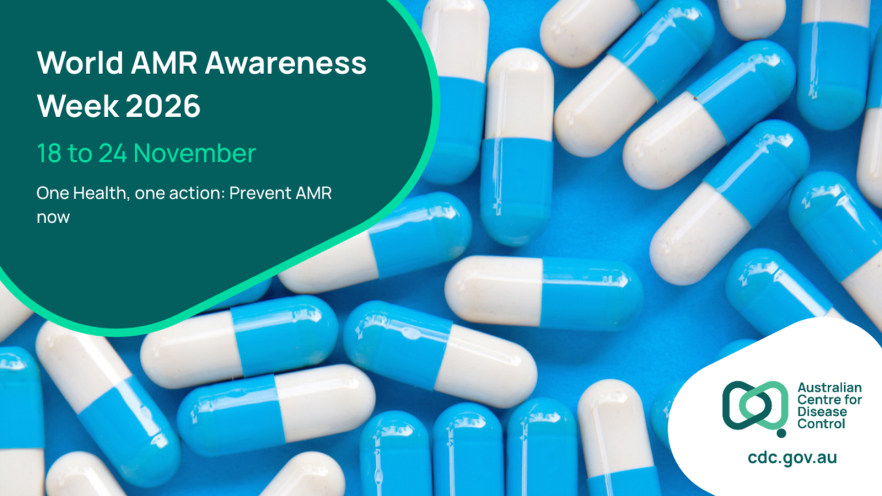
The 2026 theme is One Health, one action: Prevent AMR now.
AMR occurs when bacteria, viruses, fungi and parasites stop responding to medicines used to treat infections. This can make infections harder – and sometimes impossible – to treat.
Antibiotics and other antimicrobial medicines are an important part of modern healthcare. Protecting their effectiveness helps ensure they continue to work when people need them.
Why does One Health matter?
‘One Health’ recognises that the health of people, animals and the environment is closely connected.
This is relevant to AMR because resistant bacteria, viruses, fungi and parasites can spread between people, animals and the environment.
This means preventing AMR requires collaboration across health, agriculture, food and environmental sectors.
While no single person or sector can prevent AMR alone, every action helps.
What is one action you can take?
Everyone can help prevent AMR through small actions that protect the effectiveness of antibiotics.
You can:
- take antibiotics only as directed by a health professional
- never use antibiotics prescribed for someone else
- stay up to date with recommended vaccinations
- practise good hand hygiene
- care for cuts and wounds properly to help prevent infections.
If you have unused antibiotics, return them to a pharmacy for safe disposal. Do not throw them in the household rubbish bin or flush them away.
How can healthcare professionals help?
Healthcare professionals play an important role in preventing AMR through antimicrobial stewardship and infection prevention.
Appropriate prescribing helps preserve the effectiveness of antibiotics and other antimicrobial medicines. Conversations with patients about the appropriate use of antibiotics can also help reduce AMR and support better health outcomes.